My mother made that trip — New York to Bogotá — year after year. She went to bathe her father. To help her mother out of a chair. To manage the medications, the falls, the small indignities that pile up when a body stops cooperating and no one thought to prepare it.
I was a kid then. I didn’t have language for what I was watching. What I had was a feeling: whatever this is, I do not want it to happen to the people I love. And I do not want it to happen to me.
Thirteen years in the Marine Corps sharpened it.
In the Corps you learn what a body can do when it is trained deliberately. You also learn what it costs to be unprepared. Marines don’t think about strength as a vanity project. Strength is what keeps you and the person next to you alive. Capacity is the difference between finishing the mission and being a liability.
When I got out, I looked around at how most men were aging in America and I saw the same thing my mother was flying to Colombia to manage. Men in their 60s who couldn’t get off the floor. Men in their 70s who had stopped taking stairs. Men in their 80s who had quietly outsourced their own bodies to their wives, their kids, their doctors.
Nobody had taught them that the ability to stand up from a chair — on your own, without leverage, without pushing off with your arms — is a skill. And skills fade when you don’t practice them.
Why in-home, and why men.
Gyms are not built for a 68-year-old man who used to squat 315 and now doesn’t trust his own knees. They are loud, they are crowded with people half his age, and they punish him for the exact thing he came in to fix. Most men in that position go once, feel exposed, and never come back.
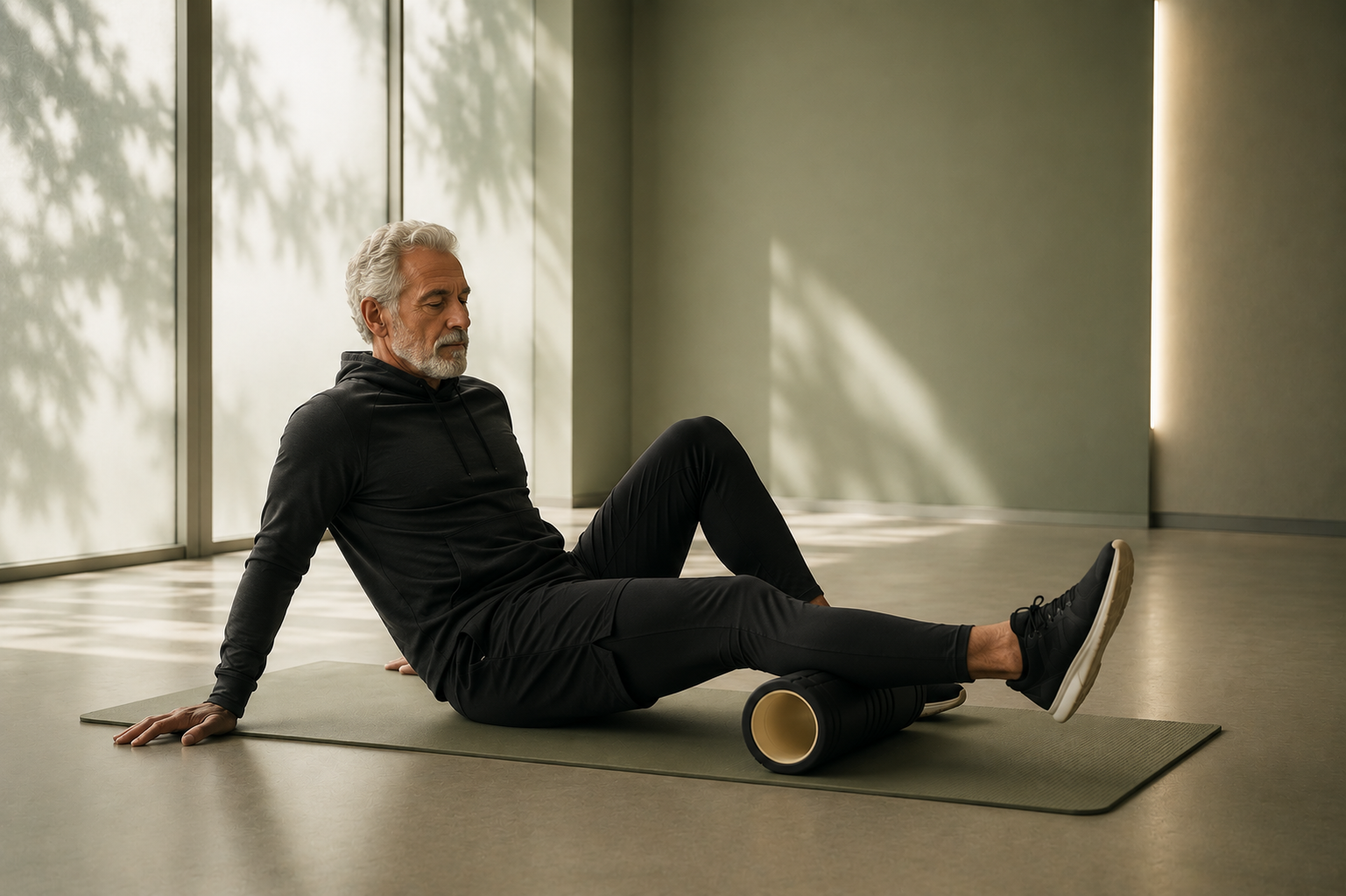
Working in-home changes the math entirely. Nobody is watching. The equipment is minimal and specific. The only person he has to answer to is me — and, eventually, himself. That is where men rebuild.
And I built this for men specifically because most of the longevity content out there is not written for us. It is written for people who have already opted in to wellness culture. My clients are men who spent 40 years being useful and are now trying to figure out what comes next without becoming a project for their families.
What I actually do.
- I show up at your home, at a time you pick.
- I assess where you actually are — not where you say you are, not where the last doctor said you were.
- We build a program around the four pillars: Physical, Purpose, Mental, Nutrition. None of them work without the others.
- We move at your pace. But we move.
- I hold you accountable the way a good friend would. Not the way an app does.
What Stand Ready is not.
It is not physical therapy. It is not a boot camp. It is not a bio-hacking cult. It is not something you follow along to on your phone.
It is a coach in your living room, once or twice a week, for as long as it takes to get you back to being the man who does not need to plan his week around what his body might refuse to do.
Why the name.
Marines use the phrase stand ready. It means: your gear is squared away, your body is capable, and when the call comes, you go. Not tomorrow. Not after you feel better. Now.
That’s the standard I want my clients living to. Not because they might get called to a mission, but because their grandkids might ask them to get on the floor. Their wife might ask them to help move a couch. Their body might ask them, one morning, to just stand up without thinking about it.
Stand Ready. Don’t Stand Still.